


Damir Sagolj / Reuters
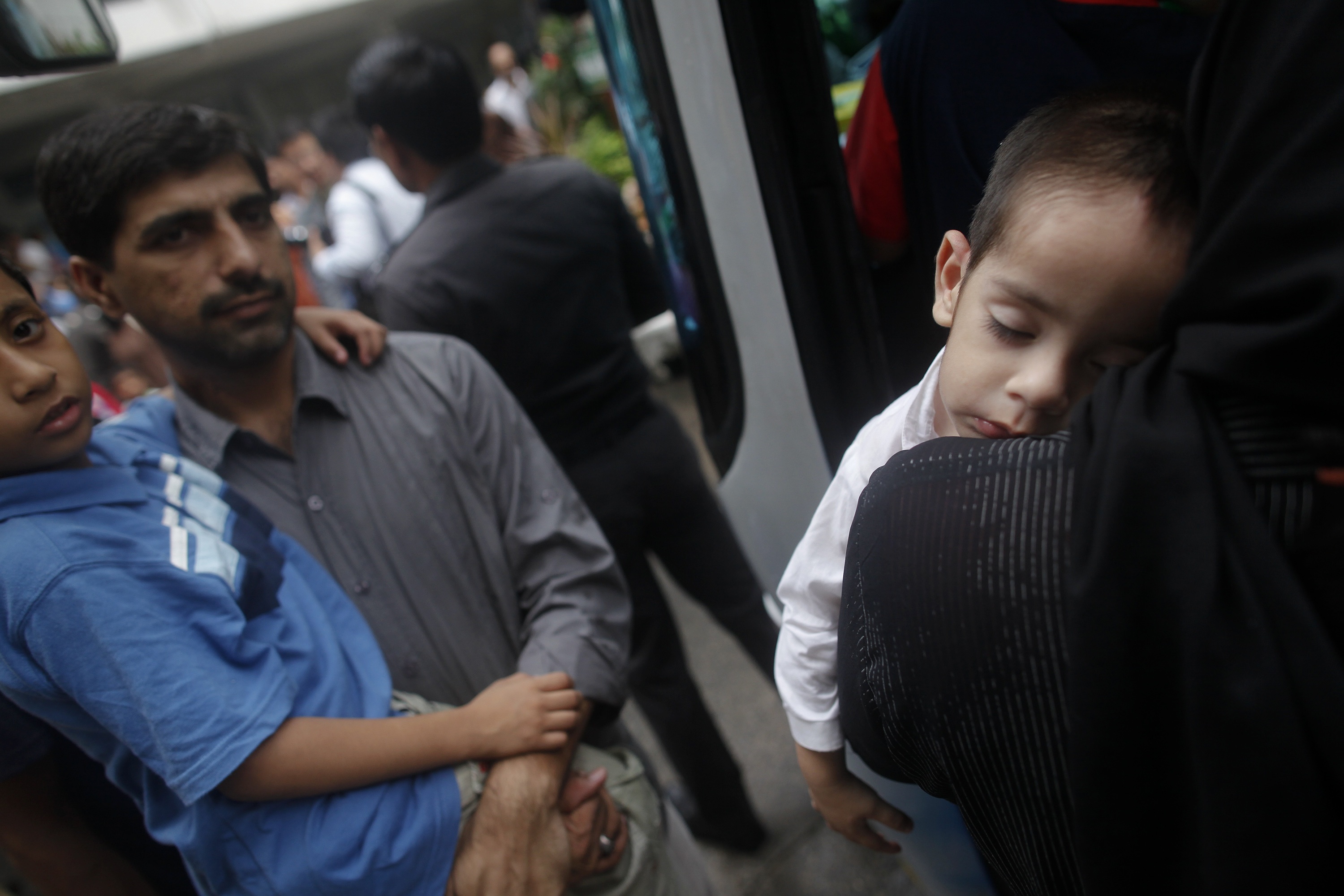
Almost 100 Pakistani refugees, including dozens of children and a month-old infant, were freed from a Thai immigration prison on Monday, after a rights group put up a $150,000 bond for their release. The men, women and children, all members of Ahmadiya, a minority Muslim sect, were detained in police raids between December and February and held for months in cramped, squalid conditions. Thailand has not signed the 1951 Refugee convention and considered them illegal immigrants. As the group drove from the detention center to the temporary housing where they’ll live until they’re resettled abroad, many wept with relief. “It’s like a bird being released from a cage,” one man said.
It’s a rare bit of good news for a religious minority that seems, increasingly, to face trouble at every turn. Unlike most Muslims, Ahmadis believe their sect’s founder, an 19th century Indian named Mizra Ghulam Ahmad, was a prophet. This and other theological disputes have brought charges of heresy, particularly in Pakistan, where the sect has endured more than 50 years of discrimination and violence. Ahmadis are banned from calling themselves Muslims or referring to their religious establishments as ‘mosques.’ In May 2010, the community suffered its worst attack when 86 people were gunned down in an hours-long siege of two mosques in Lahore. In the aftermath of last year’s flood, some displaced Ahmadis were denied aid.
And it’s not just Pakistan. The Ahmadiya are under siege elsewhere, including Bangladesh and, most recently, Indonesia. Though Muslim-majority Indonesia is known for its religious syncretism, a rising tide of extremism has brought fresh waves of anti-Ahmadi sentiment. In a frightening echo of Pakistani policy, the government banned the group from proselytizing in 2008 and recent decrees in West Java and East Java further criminalize the sect’s religious activities. According the New York Times, the number of acts of religious oppression against the sect jumped from 15 in 2008, to 33 in 2009 and 50 in 2010. In early February, hundreds of Muslim villagers attacked a group of Ahmadis in Banten Province, west of Jakarta. Several men were surrounded by the mob and beaten to death while police officers watched impassively. So far, there have been no arrests.
With any luck, the group released Monday will be spared any more of the violence heaped on those who share their faith. They’re out of jail, but, like so many refugees, are still living in limbo . It’s unclear how long they’ll wait until their paperwork is processed and they’re resettled abroad, though the UNHCR said it would be “soon.” Let’s hope so. They’ve waited long enough to worship as they please.