An excellent guest blog on how technology can struggle to keep up with giant human events, from TIME’s East Africa correspondent and Sudan specialist, Alan Boswell.
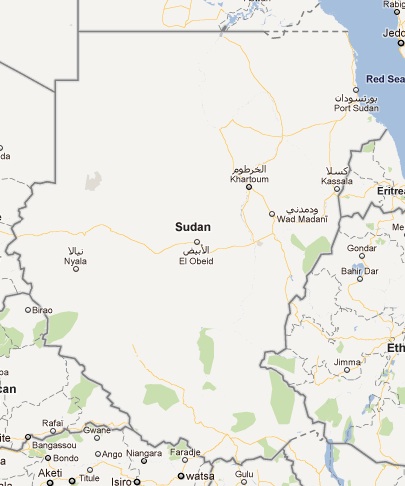
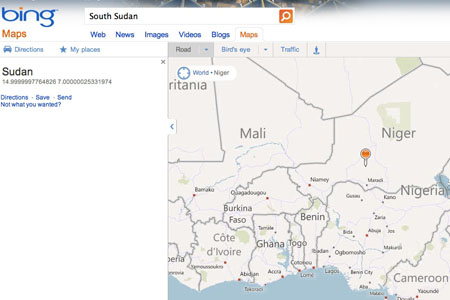
If a new country is born, and no one sees it online, does it really exist? More than a month after South Sudan’s independence, the new African nation is still not on the world’s map, literally. Google, Bing and Yahoo are all yet to update their cartography of Africa to include the United Nation’s newest member. Instead of the crooked contours that should mark the new international border, there instead lies only the uninterrupted sprawl of old, defunct Sudan.
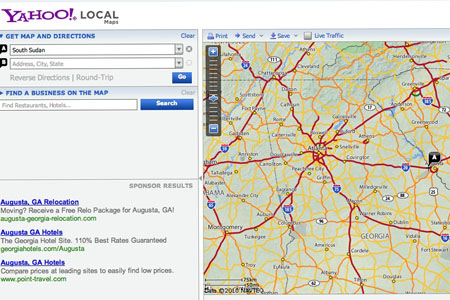
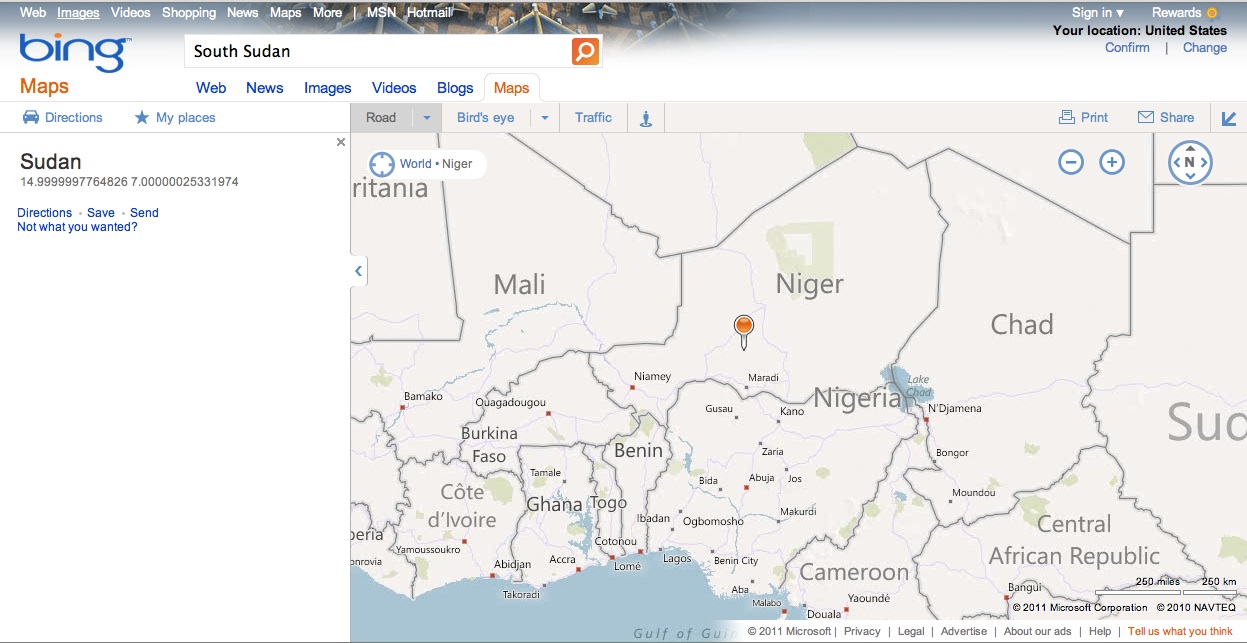
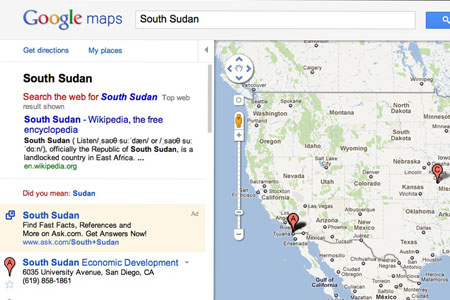
Querying Google Maps on South Sudan yields the response: “Did you mean: Sudan?” Yahoo Maps zooms in on Sudan Road on the outskirts of Augusta, Georgia. Bing Maps used to take the reader to southern Niger – which, to Microsoft’s credit, is at least on the right continent – although, after an inquiry by TIME last Friday, it now simply says it cannot find South Sudan. “We are constantly updating Bing Maps to reflect the most accurate list of countries, and will make the change in the coming months,” was a Bing spokesman’s arrestingly oxymoronic explanation.
It is true that demarcating the border between Sudan and South Sudan is a little tricky. That, after all, is a large part of what many on either side fought over for half a century, a conflict that cost 2 million lives. Even now, the new international border between the two is still not clear cut but disputed in a number of spots, including Abyei, a frequent flashpoint for fighting. But disputed borders are hardly an unfamiliar problem to map-makers: what are those dotted lines between Sudan and Egypt, or Ethiopia and Somalia or, for that matter, dividing Kashmir or the Korean peninsula?
Understandably, after 50 years of real struggle to free their country, many South Sudanese find galling the lack of virtual recognition of their achievement. John Tanza Mabusu, a 42-year old South Sudanese living in Washington, DC, has started an online petition on Change.org (http://www.change.org/petitions/south-sudan-is-an-independent-nation-include-it-on-the-world-map) asking Google, Microsoft, Yahoo, and National Geographic (which uses Bing Maps) to correct their mistake. “If South Sudan was in Europe or North America, it would have appeared on the world map by now,” he argues. He’s right. And, of course, it’s precisely because South Sudan is not in Europe or North America that Europeans or North Americans need it marked on a map.