


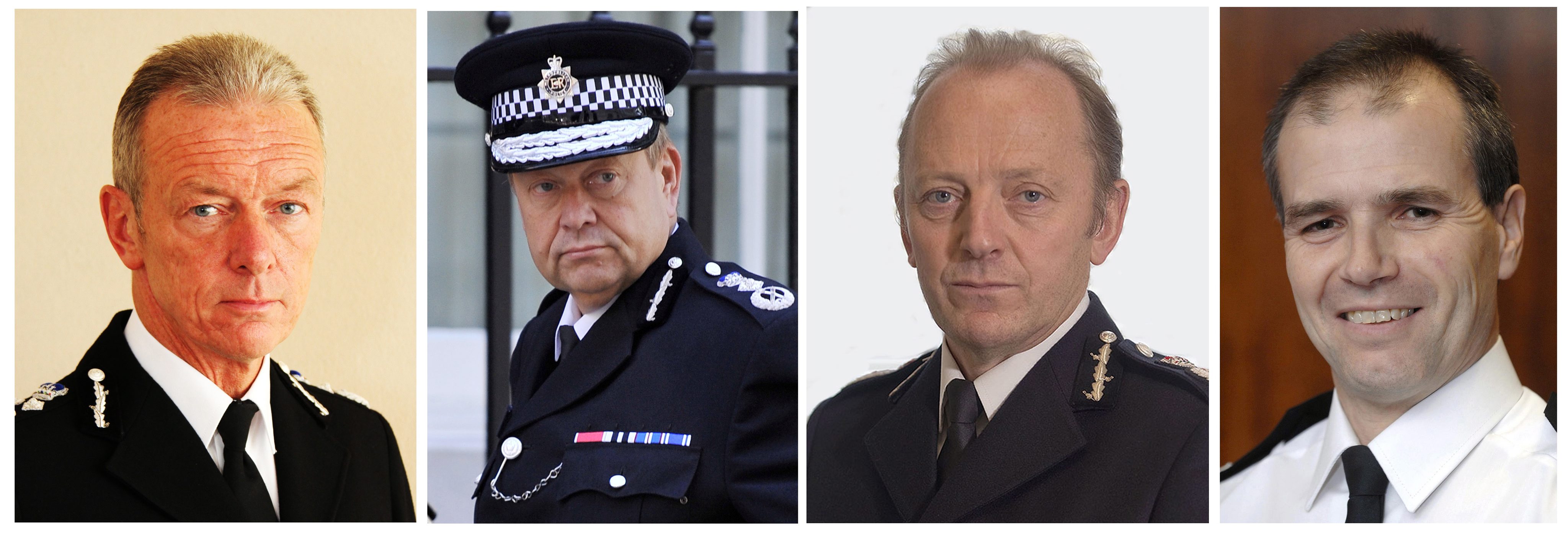
A composite photograph showing (L-R) the new commissioner of the Metropolitan Police, Bernard Hogan-Howe, former acting Metropolitan Police Commissioner Tim Godwin, Sir Hugh Orde, the former Police Service of Northern Ireland chief and Stephen House, Strathclyde Police Chief Constable
Bernard Hogan-Howe may not have been anybody’s first choice to be the new head of London’s Metropolitan police, but the important thing is he was everyone’s last choice. Home Secretary Theresa May and London Mayor Boris Johnson on Monday announced that Hogan-Howe, who has been acting deputy commission for the last couple of months, will be Britain’s new top cop. May said she’s “delighted” with the choice. “Bernard has an excellent record as a tough single minded crime fighter,” she said at the announcement in front of Scotland Yard. “I’m sure he’s going to do excellent work driving down crime.”
British officials went through a somewhat unusual process in their search for a new chief after the last Metropolitan chief of police, Sir Paul Stevenson, stepped down in the wake of the hacking scandal and bloody riots erupted across England last month. Prime Minister David Cameron mentioned former New York, Boston and Los Angeles top cop Bill Bratton as a possibility, but he was quickly shot down by U.K. politicians incensed at the idea of importing a foreigner. May seemed to favor Strathclyde police chief constable Stephen House, who has been credited with reducing gang violence in Scotland. The rank-and-file pushed for Sir Hugh Orde, the president of the Association of Chief Police Officers. And Johnson said he fancied naming Helen Mirren to the post, or at least a detective like Jane Tennison, the character she famously played in the television series Prime Suspect. Since none of these candidates seemed to please everyone, everyone compromised on Hogan-Howe.
(PHOTOS: Bobbies on the Beat.)
As far as drastic change goes, Hogan-Howe doesn’t exactly embody it. A white male with a classic British double-barreled last name, he brings with him a certain pedigree: Oxbridge credentials, popular with Conservatives, Hogan-Howe enjoys nothing more than riding through the crowds on horseback at the Grand National. The original point of this exercise — to get away from the cozy elitist relationships between politicians, the press and police that led to the hacking scandal — seems to have been forgotten in the wake of the riots.
That said, Hogan-Howe does have a long and distinguished police record. He first became a police officer in his 20s, serving in the rank-and-file before rising to detective, commander, chief constable of Merseyside Police and finally assistant commissioner of the Metropolitan Police. He became a particularly strong voice against gun crime in the wake of the killing of an 11-year-old boy outside Liverpool. He argued that those shielding gun criminals should be evicted from their homes and pressed judges for tougher sentences. He’s credited with reducing crime by nearly a third in Merseyside and halving “anti-social” behavior. In his pitch to head the Met, he said the force needed more “humility, integrity and transparency.”
Usually, only the top two candidates are interviewed by the Mayor and Home Secretary, but given the circumstances four candidates were given the honor: Hogan-Howe; Orde, who probably shot himself in the foot with his potential new bosses by publically insisting they deserved no credit in quelling the riots; Strathclyde’s House; and Hogan-Howe’s current boss, Tim Goodwin, the Met’s acting commission. Hogan-Howe took particular care to thank both Stevenson and Goodwin. His remarks were brief. “We’ll aim to make the criminals fear the police,” he said. “So let’s go in and get started.”
Hogan-Howe will have his work cut out for him from mopping up the aftermath of the riots to preventing them from happening again next summer whilst London is home to the Summer Olympics. All with one third the police and massive budget cuts. Certainly, this job will be no ride in the park.
READ: Scotland Yard is Falling Down: Will It Take Cameron Too?