


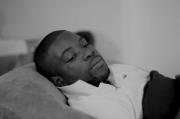
Kweku Adoboli's facebook picture
By all accounts Kweku Adoboli was a quiet, affable guy. An amateur photographer who loved music and cycling, friends in his artsy circle hardly knew he was a banker, let alone one who’d be accused of losing UBS $2 billion in rogue trades. “He was a great fan of beautiful things,” says Sanjhana Moon, a photographer who met Adoboli more than three years ago and gave him tips on his own art. “He was a very regular, kind, honest, generous guy.”
If friends are now referring to Adoboli in the past tense, it’s because no one’s sure if and when they’ll hear from him again.
Early Thursday morning, police arrested Adoboli and he remains in custody as UBS works “to get to the bottom of the matter as quickly as possible,” the company said in a memo to its 65,000 employees.
(SEE: 25 people to blame for the financial crisis.)
The 31-year-old is Ghanaian, or of Ghanaian descent. He is the son of a senior United Nations official and grew up in Israel, Syria and Iraq before being sent to the £26,000-a-year Ackworth School in West Yorkshire where he was head boy, according to the Times of London. In his profile on the school’s site he says he wanted to be an athlete or a chemical engineer when he grew up. “If life is all about winning and losing then how can sport not be about winning and losing,” he wrote. Adoboli graduated from the University of Nottingham in July, 2003 with honors and degrees in computer science and management.
According to his LinkedIn social networking profile, he worked for the last five years for UBS’s Equity Trading division as a trade support analyst in the bank’s “City” office, the nearer of London’s two eastern financial centers. Until four-and-a-half months ago, he lived in a posh $6,320-per-month loft on Brune Street, a 13-minute walk from his office. His former landlord, Philip Octave, asked Adoboli to move so that the apartment could be refurbished. Octave described his former tenant as a well-dressed and well-spoken “quiet” man who wasn’t “the tidiest of people” but was by no means a partier. He moved to Stepney, also not far from his office, where neighbors say he had a long-term girlfriend who was a nurse.
If his facebook page is to believed, Adoboli’s favorite bar was a rooftop deck at the Boundary Hotel in Shoreditch, a 15-minute walk away from his former home. With 620 bins, the Boundary boasts one of the best wine lists in London and Adoboli was a particular fan of Argentine reds. The scene there is a mix between City bankers and Shoreditch artists.
Indeed, if anything Adoboli was more artist than banker. He certainly wasn’t one of those swaggering “wanker banker” types so mocked in London. He kept his career and personal life fairly separate, says one friend who wished not to be named. “He was really into music, he loved going to concerts and art shows,” says the friend. On his facebook page he’s a fan of three bands: MC Xander, Fela Kuti and Gwenyth Herbert. “It’s so hard to imagine he did this, he was so genuine,” the friend adds.
If the accusations turn out to be true, it would make Adoboli the rogue trader with the third highest loses in history behind Jerome Kerviel, who cost Societe General $6.7 billion in 2008 and Yaduo Hamanaka who lost $2.6 billion of the Sumitomo Corp.’s money in the 1990s, but ahead of Nick Leeson, who famously brought down Barings Bank with £830 million in bad trades in Singapore. Friends described Leeson and Kerviel as regular guys as well. Notably, both Kerviel and Adoboli worked for Delta one divisions of their banks, elite equity trading teams. In his memoirs, Kerviel said that rogue trading on massive levels was a common practice throughout the industry and most bosses were well aware it. No one ever seems to catch a rogue trader, he pointed out, unless they’re losing money.
Before facebook suspended his page, Adoboli had lost five of his 420 friends since the news broke this morning. But losing friends is probably the last thing on Adoboli’s mind right now.