


Irish Presidential candidate Sean Gallagher waves to photographers after voting in Blackrock, Ireland, October 27, 2011. (Photo: Peter Muhly / AFP / Getty Images)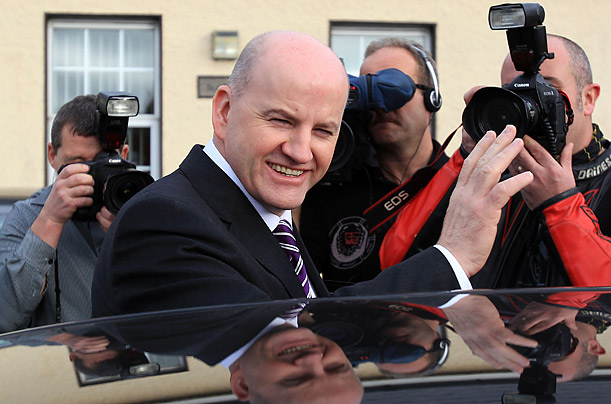
Until three days before the Oct. 27 ballot for the Irish presidency, Sean Gallagher’s 20-point lead looked unassailable. Then scandal blemished his campaign. It wasn’t your usual tawdry tale of a candidate who couldn’t keep it zipped—slacks or unwise opinions. Nor was it about venality in any direct sense. Gallagher doesn’t stand accused of using taxpayer money to live high on the hog, as some British politicians were in 2009, much less attempting to sell a political office as former Illinois Governor Rod Blagojevich did. If Gallagher is guilty—and he denies the most sulphurous accusation levelled against him, that he collected a €5,000 check on behalf of the Irish political party Fianna Fail—his “crime” is to be more closely associated with Ireland’s discredited former government than he let on.
Small beer? Perhaps. But Irish anger at Fianna Fail for leading the country from boom to penury is profound. And as in many other countries, a festering mistrust of mainstream politics is boosting the chances of outsider candidates. That’s why Gallagher, campaigning as an independent and presenting himself as a kind of Irish Herman Cain, a cleanskin free from the taint of party politics and honed for high office by years as an entrepreneur, has been faring so well in opinion polls. That’s why the suggestion that the outsider is really an insider may have killed Gallagher’s chances.
It was all going swimmingly. Gallagher isn’t just a businessman but has profile and popularity as a TV star, one of five “wealthy and successful venture capitalists” who evaluate pitches from would-be partners on the Irish network RTE’s show Dragon’s Den. The ambush came on the same network, during a televised debate, and was launched by Sinn Fein’s Martin McGuinness, a rival candidate skilled in such surprise tactics through his past membership of the Provisional IRA and subsequent engagement with Northern Ireland’s democratic system. When Gallagher admitted he had been “a grassroots member” of Fianna Fail, McGuinness pounced, alleging that Gallagher had helped organize a Fianna Fail fundraiser, issuing invitations, arranging delivery of photographs of the participants with then premier Brian Cowen, and even collecting the entry fee. “There was something very rotten at the heart of the last administration and as far as I’m concerned, Sean was part of that,” said McGuinness.
Gallagher accepted that he had issued invitations and may have passed on photographs, but continues to reject the claim about the money. Results, due on the evening of Oct. 28 or the following day, will show whether voters have given him the benefit of the doubt. If not, the next President of Ireland is most likely to be the candidate until election week running Gallagher a distant second, a veteran politician from a storied mainstream party—Michael D. Higgins of Ireland’s Labour Party. McGuinness, in third place, seems unlikely to profit from his role in toppling Gallagher.
This may all seem like a sideshow as the economic forces that laid waste Ireland and brought down its government continue to rage through the euro zone. And on one level it is, since the presidency is largely symbolic. But it matters in Ireland where the choice of president has provided Irish voters with a way to express their changing aspirations and self image. And there are wider resonances everywhere, for electorates—and candidates—in an era set against old politics but not at all sure what or who should fill the vacuum.
Catherine Mayer is London Bureau Chief at TIME. Find her on Twitter at @Catherine_Mayer or on Facebook at Facebook/Amortality-the-Pleasures-and-Perils-of-Living-Agelessly . You can also continue the discussion on TIME’s Facebook page and on Twitter at @TIME .