


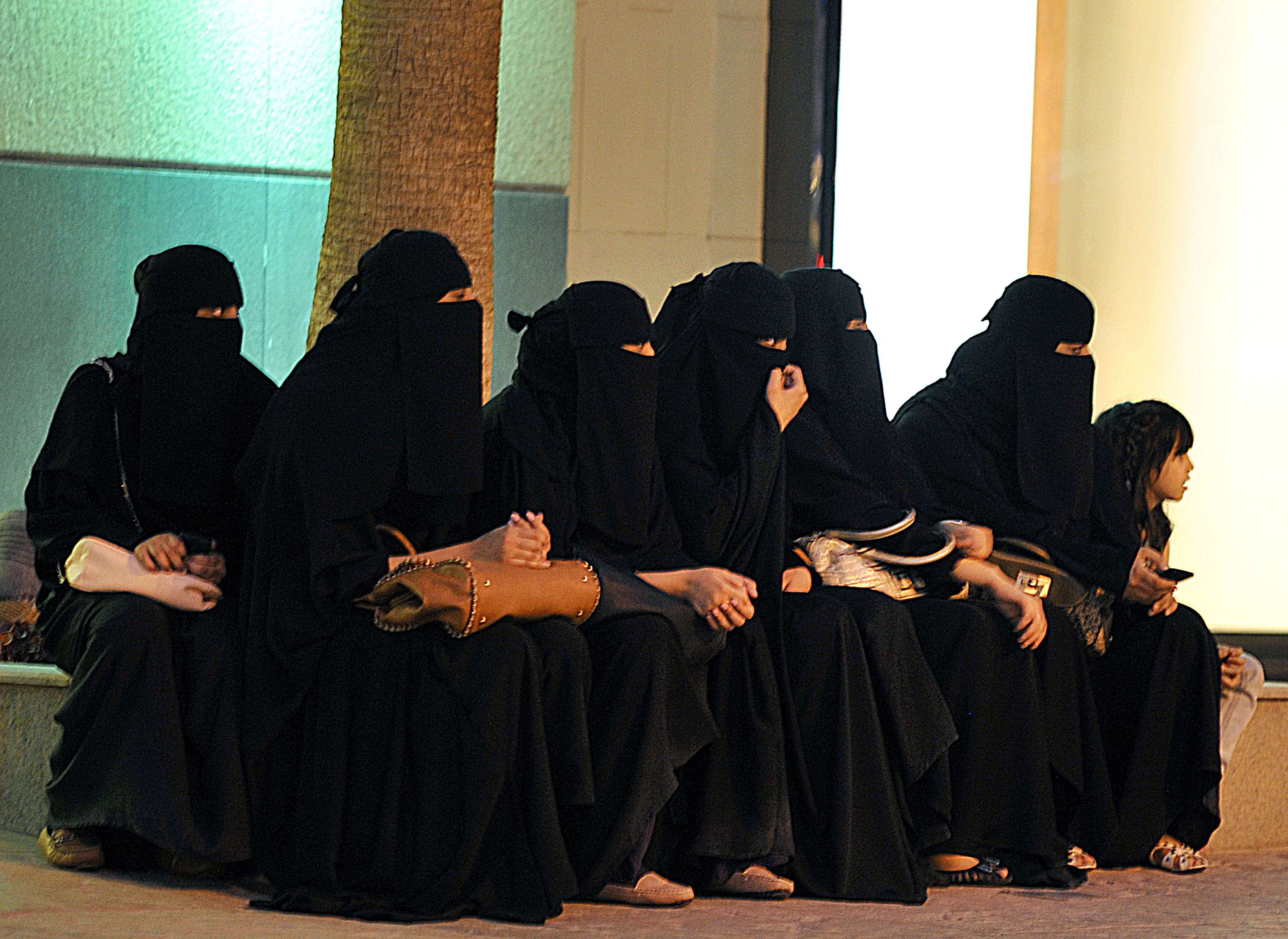
Saudi women wait for their drivers outside a shopping mall in Riyadh on September 26, 2011 a day after King Abdullah granted women the right to vote and run in municipal elections. (Photo: Fayez Nureldine / AFP / Getty Images)
On Sunday, Saudi Arabia’s King Abdullah granted women the right to vote and run in the next set of municipal elections, scheduled for 2015. That’s good news. But not as good as you might think.
Saudi Arabia is perhaps the most sex-segregated place on earth, a country where women can do little without a male chaperon and are not allowed to drive. The roots of this rigid social system can be traced to the traditions of the area’s Bedouin tribes, who took pride in keeping women from public view. The practice has since been codified by conservative Muslim clerics on the grounds that women should follow the strict set of 7th century rules that once applied to the Prophet Muhammad’s wives. Many Saudis, male and female, have challenged the social order (most recently, by publicly flouting the country’s driving ban). And yet, there have been few formal changes, making King Abdullah’s decree a welcome surprise. It’s a small victory for the country’s activists and shows the Kingdom might be willing to change—at least a little.
The problem is that under the current system of government, voting won’t give Saudi women, or any ordinary citizen, much power. The country is still an absolute monarchy and municipal councils, introduced in 2005, hold little sway. The King’s promise to allow women to sit on Majlis Al-Shura, a council that advises the royals on public policy, feels hollow. For years, Saudi activists have campaigned to have the members of the 150-member body elected, not appointed. By announcing, suddenly, that women will get a seat, the King seems to have sidestepped, or sidelined, that debate. Plus, there’s no guarantee the rule will be implemented: A recent decree that lingerie shops should be staffed by women, not men, has yet to be enacted.
Giving women the vote may also sideline debate over the driving ban. Inspired by female revolutionaries in Egypt and elsewhere and fed up with being kept off the road, a small but vocal group of Saudi women have been actively fighting for their right to drive. Despite their best efforts, the ban persists. If a women is in fact appointed to the Shura council, she won’t be able to drive to work. It is a stark reminder that, despite this small, symbolic step, spring has yet to bloom in Saudi Arabia.
(Video: TIME’s Aryn Baker rides along with a Saudi woman driver)
Emily Rauhala is an Associate Editor at TIME. Find her on Twitter at @emilyrauhala. You can also continue the discussion on TIME’s Facebook page and on Twitter at @TIME.